Circadian Lighting for Home: The Right Bulb for Every Hour
D'leaps Design Desk · 2026-10-16
Circadian lighting for home, explained simply: which Kelvin to use from morning to night, room by room, with Hyderabad costs and a check you can do tonight.
Most flats in Hyderabad come with the same light in every room: a flat white panel or tube marked “cool daylight”. At 7 in the morning you switch it on to find your keys. At 11 at night you switch on the same light to check on a sleeping child. Circadian lighting for home starts from one idea: those two moments should not get the same light. You can set this up without rewiring your flat or spending much money.
What Kelvin means, and what the box actually says
Colour temperature is measured in Kelvin (K). It describes how warm or cool a white light looks. Lower numbers look yellow and higher numbers look blue-white. Bulb boxes in Indian shops rarely lead with the number, so learn the names they use instead:
- Warm white, 2,700 to 3,000K. The colour of a table lamp in the evening.
- Neutral or natural white, 4,000K. Clean without looking clinical.
- Cool daylight, 6,500K. The bright blue-white of most builder fittings and old tube lights. The box often just says “CDL”.
For reference, a diya flame sits around 1,800 to 1,900K. That helps you picture 2,200K, the very amber light the reference charts suggest for late night.
Brightness is a separate measure, counted in lumens. A 9W LED gives roughly 800 to 900 lumens whatever its colour. So “warm” does not mean “dim”. This is why a warm bulb alone does not fix an over-lit bedroom.
Why one light all day works against you
Your body runs on a roughly 24-hour clock, and light is the main signal that sets it. The receptors in your eye that keep this clock respond most to bright, blue-rich light from above, which is what daylight looks like. Evening light of the same kind tells your brain it is still afternoon. Melatonin, the hormone that makes you sleepy, then gets released later.
Colour is only one of three things that matter. The other two are brightness and height. A 3,000K ceiling panel at full power at 11 PM is still a lot of light coming from where the sky would be. A low 4,000K lamp across the room is gentler than its number suggests. In the evening you want all three changes together: dimmer, warmer, and lower.
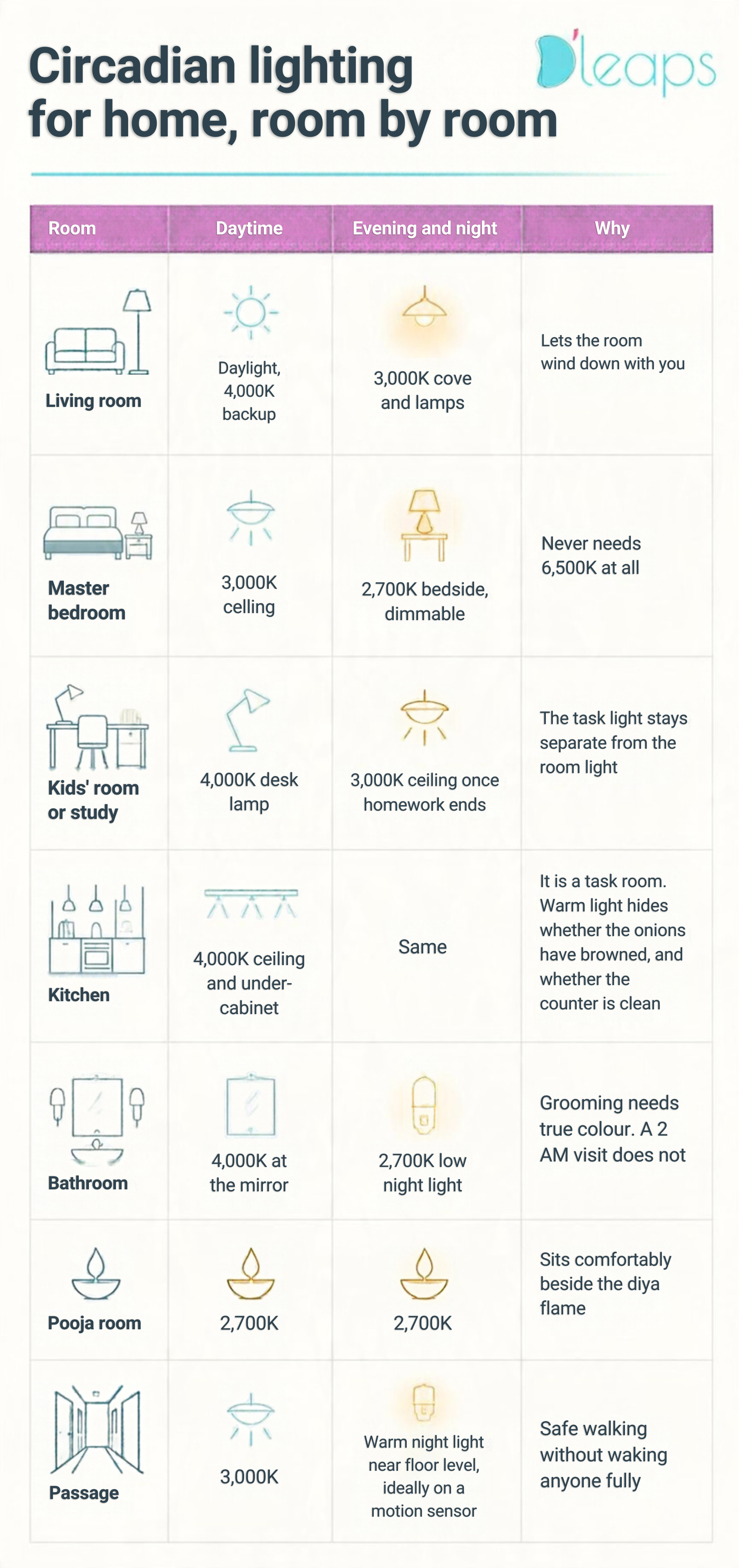
A realistic day plan, and where the chart oversells
The infographic designers often share divides the day into four bands. It suggests 6,500K for the morning, 5,000K at midday, 3,000K in the evening and 2,200K at night. The logic is sound. The morning figure is where homes go wrong.
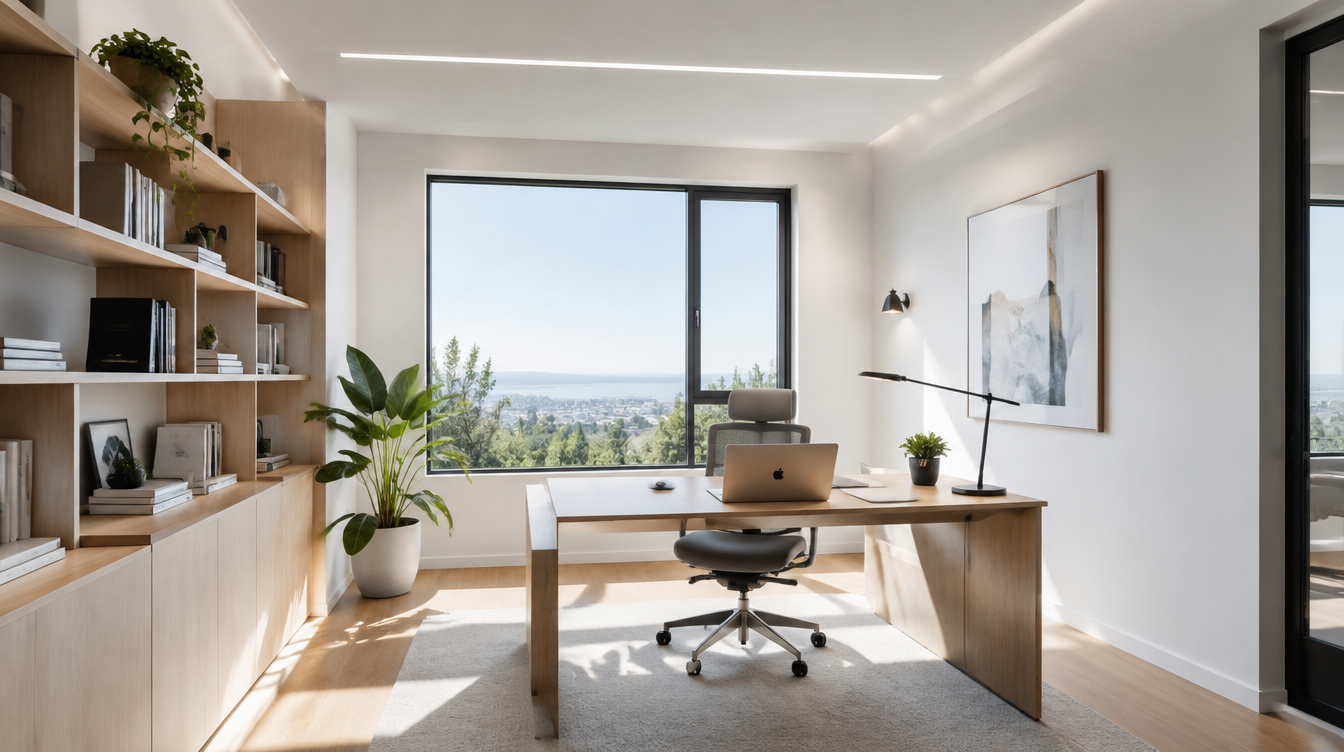
Morning. In Hyderabad, the sun does this job better than any bulb. Outdoor daylight is many times brighter than any ceiling fitting you can buy. [VERIFY: lux comparison, typically 10,000+ outdoors vs 200 to 500 indoors] Open the east or north curtains and eat breakfast near a window. A 6,500K panel at 7 AM mostly adds glare. The exception is the monsoon, June to September, when grey mornings and inward-facing kitchens do need a bright 4,000K ceiling light.
Midday. Use 4,000K wherever work happens. A home office desk lit at 4,000K with a separate desk lamp is enough. 5,000K suits a study table but looks harsh in a living room.
Evening. After sunset, roughly 6:30 PM for most of the year, switch to 3,000K and turn the ceiling lights down or off. West-facing living rooms take low, harsh sun between 4 and 6 PM. The fix there is blinds, not more light.
Night. About an hour before bed, use 2,200 to 2,700K from one or two low sources only. A 2,200K bulb is hard to find locally. A 2,700K bulb in a lamp with a fabric shade gets you close.
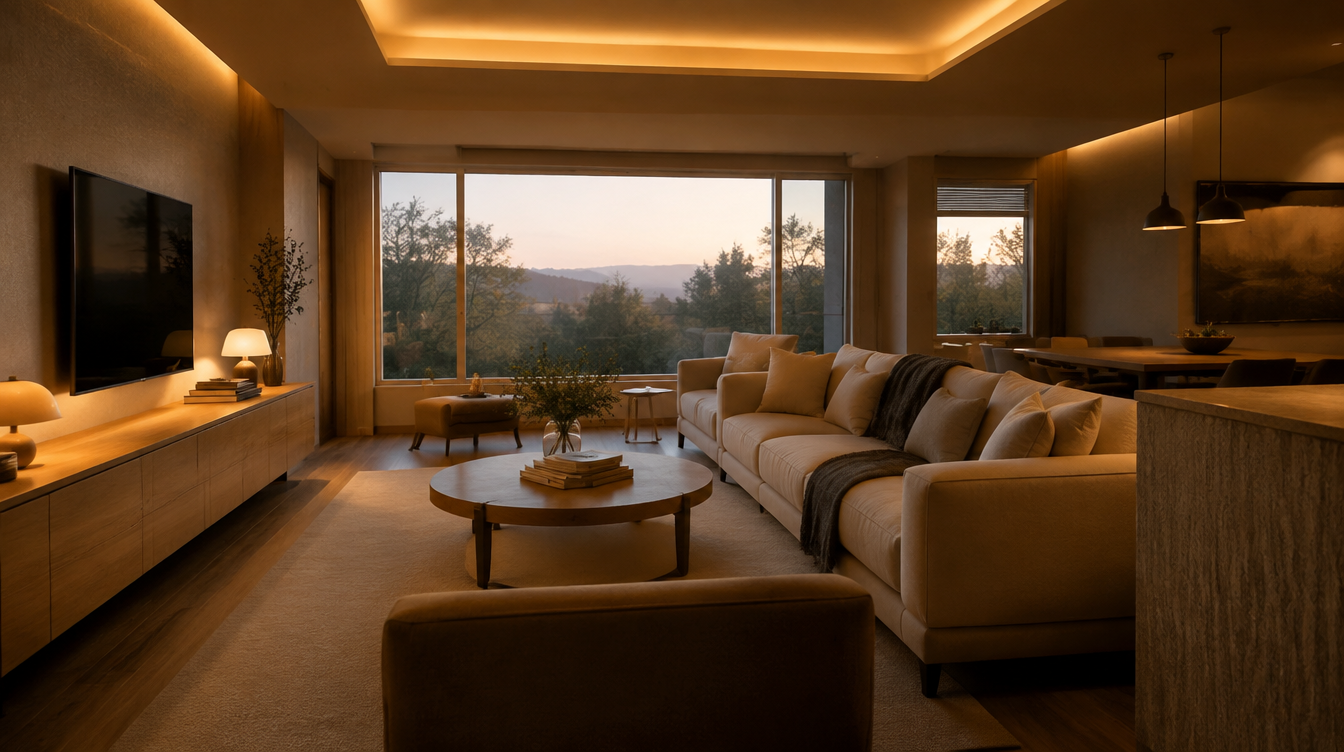
The rule to carry away: overhead and white by day, low and warm by night.
This matters most in joint family homes. Grandparents may be in bed by 9:30 PM, while a teenager studies till midnight in the next room. Zoning is the answer: the desk lamp stays on, the ceiling light goes off, and nobody else’s evening is lit like an office. Zoning depends on having separate switches, and that has to be decided at the electrical stage, not after painting.
Three ways to set it up, from almost free to fully tunable
1. Two fixed temperatures on separate switches. Use a 4,000K ceiling light for the day and 2,700 or 3,000K lamps and cove for the evening. You pay only for bulbs, roughly ₹300 to ₹650 each (indicative, Hyderabad). For most flats this is genuinely enough. The only cost is remembering to switch.
2. Smart tunable bulbs in lamps and pendants. These Wi-Fi bulbs shift from about 2,700 to 6,500K and can follow a schedule set in an app. They cost roughly ₹500 to ₹1,500 each [current prices, Philips WiZ / Wipro / Syska range]. They need a standard bulb holder (B22 or E27), so they will not replace a builder’s flat panel. Keep the wall switch on. If someone switches it off at the wall out of habit, the schedule stops working, and elders do this a lot.
3. Tunable downlights and cove at fit-out. CCT downlights, meaning fittings that change colour temperature, cost roughly ₹900 to ₹2,500 each with a remote or app. A 3BHK with 30 to 40 downlights typically adds ₹25,000 to ₹60,000 over fixed fittings. [VERIFY] You must decide this before the false ceiling is boarded. The fittings need the right driver, sometimes an extra wire, and an access panel to reach it later.
Mistakes we see in Hyderabad flats
- Two temperatures in one view. A 3,000K cove around a 6,500K centre panel makes the edge of the ceiling look yellow and the middle look blue. Most people read it as a fault. Keep to one temperature per zone at any time.
- Cool daylight in the bedroom. This is usually the builder default, kept because “brighter is better”. It is the single most common thing to change.
- Warm bulbs from two brands in one room. One brand’s 3,000K can look visibly different from another’s. Buy one brand per room.
- A smart bulb on a dimmer switch. The two controls fight each other and the bulb flickers or fails early. Use one or the other.
- Choosing laminates under showroom light. A laminate that looks grey under the showroom’s 6,500K can turn beige under your 3,000K evening light. Check samples at home in the evening.
Check your home tonight
After dark, hold a sheet of plain white A4 paper under each light in your living room and bedroom. If it looks bluish, that light is around 6,500K. Creamy yellow means warm white, and plain white means neutral. If the paper changes colour as you walk across one room, you have mixed temperatures.
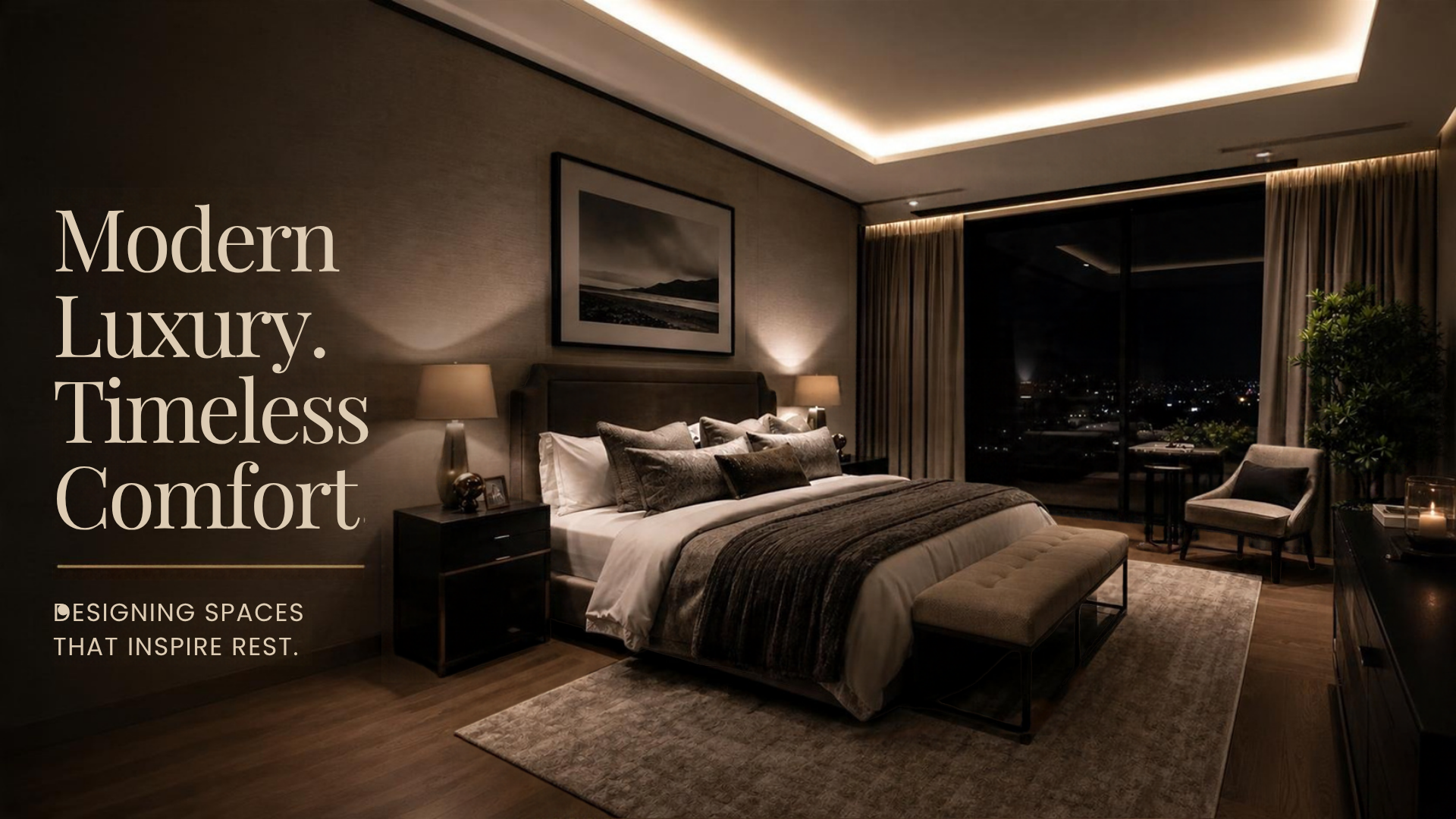
Then, at 10 PM, count how many lights above head height are switched on. If the bedroom has more than one overhead light on an hour before sleep, start there. Unscrew one bulb and read the base for “6500K” or “CDL”. Two 2,700K bulbs for the bedside lamps cost about ₹300, and you can make that change this weekend.
If you remember one thing: light in the evening should come from a lamp, not the ceiling.
Planning your electrical layout? WhatsApp your floor plan to +91 91210 00207 and we’ll mark which lights should be warm, neutral or dimmable, room by room.
Get a free modular kitchen quote from D'leaps
Planning your kitchen or a full-home fit-out? Talk to our designers for a free, no-obligation quote and a written completion date.
WhatsApp us on 9121000207 · Call +91 9121000207 · Book a free consultation
Related reading
- False Ceiling Guide: Gypsum vs POP, Cost and Cove Lighting
Gypsum vs POP false ceiling - what each one costs in Hyderabad, which survives our humidity, and how to plan cove lighting before the board… - What to Tell Your Interior Designer Before Design Starts
Pinterest shows a look, not your life. Here's what to tell your interior designer about your kitchen and storage so the design fits your… - Space-Saving Ideas for Small 2BHK Flats in Hyderabad
Small 2BHK space-saving ideas with real measurements: wardrobe, bed, dining and TV sizes, clearances, and the mistakes that eat floor space… - Civil Work and Waterproofing Costs in Hyderabad (2026)
Civil work and waterproofing costs in Hyderabad for 2026: real per sq ft rates, which walls you can't break, sunken slab leaks, and honest… - 5 Things that go wrong in your home interiors
Week 9 of a "45-day" project and ₹2L over budget. The 5 interior design problems Hyderabad homeowners hit most, and the question that…